Sunday, May 23, 2010
Musica Electronica -- Song of the Month
About two minutes of this is sufficient, but it gently rewards greater loyalty, too.


Excerpt from NYT: Rand Paul and the Perils of Libertarianism


Rand Paul and the Perils of Textbook Libertarianism
By SAM TANENHAUS
Published: May 21, 2010, NYT
". . . Mr. Paul has tangled himself up in a . . . contradiction. His championing of private businesses, ignoring the rights of just about everyone else, places him on the wrong side of history, just like the first opponents of the Civil Rights Act. One fierce opponent of civil rights legislation, William F. Buckley Jr., admitted as much. 'I once believed we could evolve our way up from Jim Crow,' Mr. Buckley said in 2004. 'I was wrong: federal intervention was necessary.'”
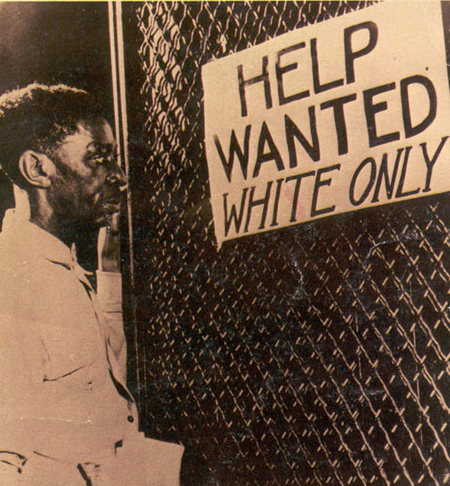
(That's Ayn Rand on the left up there. My guess: Rand P. got his name from A. Rand.)
Thursday, May 20, 2010
Michael Kinsley on "Tea Party Patriots"

Michael Kinsley in the 6.10 Atlantic Monthly:
Some people think that what unites the Tea Party Patriots is simple racism. I doubt that. But the Tea Party movement is not the solution to what ails America. It is an illustration of what ails America. Not because it is right-wing or because it is sometimes susceptible to crazed conspiracy theories, and not because of racism, but because of the movement’s self-indulgent premise that none of our challenges and difficulties are our own fault.
“Personal responsibility” has been a great conservative theme in recent decades, in response to the growth of the welfare state. It is a common theme among TPPs—even in response to health-care reform, as if losing your job and then getting cancer is something you shouldn’t have allowed to happen to yourself. But these days, conservatives far outdo liberals in excusing citizens from personal responsibility. To the TPPs, all of our problems are the fault of the government, and the government is a great “other,” a hideous monster over which we have no control. It spends our money and runs up vast deficits for mysterious reasons all its own. At bottom, this is a suspicion not of government but of democracy. After all, who elected this monster?
This kind of talk is doubly self-indulgent. First, it’s just not true. Second, it’s obviously untrue. The government’s main function these days is writing checks to old people. These checks allow people to retire and pursue avocations such as going to Tea Party rallies. This basic fact about the government is no great secret. In fact, it’s a huge cliché, probably available more than once in an average day’s newspaper. But the Tea Party Patriots feel free to ignore it and continue serving up rhetoric about “the audaciousness and arrogance of our government,” and calling for the elimination of the Federal Reserve Board or drastic restraints on the power of the Internal Revenue Service.
“I like what they’re saying. It’s common sense,” a random man-in-the-crowd told a Los Angeles Times reporter at a big Tea Party rally. Then he added, “They’ve got to focus on issues like keeping jobs here and lowering the cost of prescription drugs.” These, of course, are projects that can be conducted only by Big Government. If the Tea Party Patriots ever developed a coherent platform or agenda, they would lose half their supporters.
Wednesday, May 19, 2010
Orwell and Detroit

Chevrolet makes a bulbous SUV which they've named the Chevy "Tahoe."
Audacity? Well, yes, in one sense it seems to be staggering audacity to name this gaseous bag of pollution after a lake renown for its pristine waters.
However, I'm sure that the marketing mind who came up with this meant merely to connect the vehicle to the rugged, glorious, "off-road" outdoors that the "V" can more easily access if it's a "SUV."
Still, the irony of naming this bloatmobile after Lake Tahoe could not have been lost on the fine minds at Chevy. And I wonder: Did they express concern that there may be some backlash from environmentalists if they name their new gasbag "Tahoe"? Or upon perceiving the irony, while also appreciating the power of the name, did they just chuckle . . . and move on to other business?
Tuesday, May 18, 2010
Financial System as a Casino Producing . . . Nothing Except Losers and Lost Possibilities

From Frank Rich column, 4.24.10, NYT:
"Even if the [financial] reform bill does bring stringent regulation to derivatives — a big if — that won’t rectify capitalism’s worst “innovation” in our own Gilded Age: the advent of exotic, speculative “investments” that have no redeeming social value and are instead concocted to facilitate gambling for its own sake. Such are the Goldman instruments of mass financial destruction that paid off for John Paulson. In 2007 alone, according to Gregory Zuckerman in his book “The Greatest Trade Ever,” Paulson’s personal take amounted to over $10 million a day, “more than the earnings of J. K. Rowling, Oprah Winfrey and Tiger Woods put together.” That “financial alchemy,” as Zuckerman calls it, explains why the finance sector’s share of domestic corporate profits, never higher than 16 percent until 1986, hit 41 percent in the last decade.
As many have said — though not many politicians in either party — something is fundamentally amiss in a financial culture that thrives on “products” that create nothing and produce nothing except new ways to make bigger bets and stack the deck in favor of the house. “At least in an actual casino, the damage is contained to gamblers,” wrote the financial journalist Roger Lowenstein in The [NY] Times Magazine last month. This catastrophe cost the economy eight million jobs."
Consider also Garry Kasparov, former chess World Champ, in the New York Review of Books a few months back. He reviewed "Chess Metaphors: Artificial Intelligence and the Human Mind." In his review he writes:
"Like so much else in our technology-rich and innovation-poor modern world, chess computing has fallen prey to incrementalism and the demands of the market. Brute-force programs play the best chess, so why bother with anything else? Why waste time with new and innovative ideas when we already know what works? Such thinking should horrify anyone worthy of the name of scientist, but it seems, tragically, to be the norm. Our best minds have gone into financial engineering instead of real engineering, with catastrophic results for both sectors."
Sunday, May 9, 2010
Riding Bikes on the Freeway -- A Serialized Story

Daddy clearly took pleasure in turning to me with, “Daughter, why don’t you go ride your bike on the damn freeway?” and I surely loved hearing him say it whenever he and I both knew I was pestering him for that very reaction. And we did have a stretch of what would be Interstate 10 right outside of the little motel mama and daddy bought just inside the California border, but at the time it was just 4 unlined lanes of blazing white pavement, about 3 miles worth, unconnected on either side. A “patch” we called it. It was the connections mama and daddy waited for, but in the meantime, when it wasn’t too blazing sunhot or windy to leave grit on your tongue, that stretch of freeway was mine, all mine, or nearly so, for all the games I played during my back and forths on that bike.
I shared it with my brother and the few kids from the trailer park behind the motel, but I owned that road just because I rode it the most, but also because I talked about it the most.
“Won’t none of us be able to ride on patch when it gets all connected,” I intoned with authority more than once. “And then with all the business coming in, we’ll build TWO swimming pools and TWO more stories for the motel,” I’d continue, echoing what I’d heard from my daddy many times. Then, just to maintain my family’s aristocracy, I’d add, “And, you know, we’re gonna have to turn the trailer park into miniature golf course for the leisure of our guests.” It always disappointed me that that younger trailer kids didn’t fully understand the implication of the miniature golf plan.
That was my plan anyway.
I Stole the Class Milk Money: My History of Avarice -- Finding My Conscience

I discovered my conscience only after I became the milk money thief. My conscience, a flickering thing at the time, might have sparked some hesitation prior to my thievery, but a bicycle, just the glimmer of a bicycle, blotted out what little light my conscience may have cast upon the matter. It was pure arithmetic at the time: money = bike. Easy money = bike sooner. No algebraic variables to muddy to equation.
I was in the first grade, living on a cul de sac littered with boxy apartments buildings and inhabited by lots of kids, almost all of whom had bikes. I knew how to ride a bike and I was big enough to get a real bike, the kind with air in the tires, but my dad said I’d have to save up some of my allowance if I wanted a bike.
It was 1960 or thereabouts and I was allowed 25 cents each week. Gratis. I never remember having any chores. So it’s my parents’ fault that I never learned to earn and become righteous. For the bike, I had to save 10 bucks. I don’t know if I knew that meant 40 weeks of not spending so much as a penny at the penny candy store up the hill, but I did know two things: 10 bucks was more money than I could imagine and I’d never save up that much. And even if I could save it, winter was coming soon and there’d by no bike riding in winter. Cold. Wet.
It gnawed at little me. I had no imagination for solutions. Gnawing frustration visited, often in the form of tantrums and tears, when I saw other kids riding their bikes away, it seemed, from me, and off into a land of play for bigger boys. Sometimes they’d race around the cul de sac, around and around, passing my dejected countenance as I begged for a turn on this boy’s bike or that boy’s bike. But I knew that if I had a bike, no one but me would ride it because I wouldn’t be able to bear getting off it.
Usually, they just rode off, emptying the cul de sac of all the fun, leaving me there wondering what to do.
Bike!
Want bike!

Then one day, a wondrous thing happened. We were in our classroom, doing whatever first graders did in those days, and it started to snow. A rarity in Mississippi. Snow, quiet snow, in flakes yards apart, falling so quietly, like ash from the summer swamp burns, but each flake white as, well . . . snow. Snow! Falling, but slowly. Everywhere. So slowly. Had you ever seen anything fall so slowly and quietly? Sure, it didn’t stick, but . . . it’s snowing in Mississippi in November. Snow!
I wrestled with myself because it was surely beautiful, but it was also a bad sign. Winter in Mississippi didn’t burden us with snow, but our winters were cold, wet and windy – not bike riding weather – and snow, as transfixed as I was by its loveliness, meant winter. Now my gnawing bike anger was ruining even my ability to appreciate this wintry miracle outside.
All the kids ran to the window to draw and yell. “Can we go get a bunch?!!?” “What’s it taste like?” “Can we get some and draw ‘em?” “Will we be able to get home?” The teacher, Miss Mary, seemed as delighted as we were and I remember her laughing in a way that seemed so adult as if to say, “Well, I’ll be . . . .” She walked out of the classroom laughing. That I remember well.
Because that’s exactly when I saw the milk money. Money collected once a week from all the kids to buy the week’s supply of milk and graham crackers. Just sitting there in a big envelope. All the kids were at the window. The teacher gone. Gotta be 10 bucks in that fat envelope.
I took it. Snuck it into my little shirt and then into my satchel.
Later that day, walking home, I opened the envelope. There, the first bill I took, was a 10 dollar bill. I put that bill in my pocket and the envelope back into the satchel and I went home, presented it to my mother and said, “Let’s talk bike.” Or something like that.
“Where did you get this, Gregory?” my mother asked.
“Found it on the street.”
“You found it on the street?”
“That’s right.”
Well, I seem to recall she had a look on her face like she’d just thought of a new way to serve a chicken. A look of discovery and planning all at the same time.
“C’mon, lemme read you a story,” she said.
Sounded good to me. Life was all good now. Except it wasn’t all good because I felt as if a connection to my mother was strained to breaking. I didn’t feel badly about taking the money – didn’t give it a second thought yet! – but lying to my mom made my feel lonely somehow.
I sat next to her on that ratty brown sectional sofa and sunk as deeply into it as a little boy could while leaning, almost pushing, just as heavily into my mother’s right arm, just to reestablish or confirm a connection.
How I wish I could remember what she was reading. How I wish I could ask her. But she’s gone now and it was some 43 years ago. Doesn’t matter because I do remember not paying much attention to the story. Everything in me was a like a darkening sky troubled with swirling swamp ashes blown by a wind gusting this way and that, a wind that seems to sweep the air away making it hard to breathe. I felt born away from my own mother. I was aloft, torn away from a solid foundation and I began to sob. I pushed my head into something surely solid, my mother and everything motherly about her, and I sobbed.
At first, she just kept reading like she didn’t notice. Or like it was expected. “Well, now, what is upsetting you so?” she finally asked.
It relieved me, it settled me just to have the opportunity to tell her and to clear the skies in my heart. “Mom,” I sobbed. “I took that money at school.”
And that’s the day, without having a word for it . . . that’s the day I became acquainted with my conscience.
My mom presented it to me without a word and waited for me to discover and make use of it.
Friday, April 30, 2010
Republiconfederates and Slavery Month

For a long time now the Republicans have looked in vain for some governmental initiative they can actually say “Yes!” to with fervor. And so it comes as no surprise that slavery-nostalgia has once again risen with it’s gory frame in Virginia just in time for Republicans and their Tea Party cousins to say “Yes! Yes! Yes!”
You see, a Republican’s idea of “civil rights” would have us all return to the romantic past of nearly free, but wholly exploited, labor and godlike power over other human beings who would provide that free labor and all the economic benefits that can accrue thus allowing for the fetishization of such luxuries as chivalry and gentlemanliness, courtesies not extended to black women who were, instead, sexually exploited and at very young ages. What a wonderful world!!!
And so we have the recent decision by the Republican Master of Virginia to proclaim April as "Confederate History Month"?
Yes, yes, Republicans and a few hard core old-time leftists argue that the Civil War wasn’t about slavery. But try telling that to the enslaved folks of the day or their descendants. I can hear it now as a slaveowner speaks to one of his enslaved at the time: “Henry, you been with me a long time, as were your wife and children before I sold them to those Georgia planters, and I want you to know that I don’t intend to fight for the Confederacy so that I can continue to enslave you or even so that I can continue my nightly visits to your daughter! No! In fact, I’m opposed to slavery, but I’m enslaved by it as much as you are!”
Because, as Republiconfederates will tell you, the war was fought to defend “States’ Rights!” Like, for example, the States’ Rights to trample on Human Rights without interference from the pesky Bill of Rights. Or to put it another way, it’s the States’ Rights to enslave, exploit, sell, maim, rape, torture, and kill other human beings.
Now, the Virginia proclamation doesn’t mention any of that. Defenders of it speak of the South’s “War of Independence” without mentioning that the enslaved people who really needed independence would have seen little of it had the South won its war of independence.

The proclamation called for a remembrance of a time when Confederate soldiers "fought for their homes and communities and Commonwealth in a time very different than ours today."
Yes, a different time, and . . . a better time our Republiconfederates wistfully tell us.
That language – “a different time” –is meant to exculpate the Confederacy of its support of slavery. This is the kind of cultural relativism that conservatives generally reject.
True, after a while, the Virginia Governor apologized for omitting any mention of slavery in the Proclamation. However, I’d argue that he did not omit a mention of slavery in the Proclamation. “Confederacy” is synonymous with “slavery.” The two are at least inextricable. Praising the Confederacy, praising those who fought for the Confederacy, amounts to praising the right to enslave. The Rebel flag on your truck says, “I appreciate those enslavers!”
Now some Republiconfederate leaders around the country if asked to comment on the Virginia proclamation that seems to ignore an evil defended by the Confederacy at the time would probably say, “You know, slavery . . . that’s all behind us now. No point on dwelling on that.”
Well, the Confederacy, having lost, is surely behind us now, too, until, that is, Republiconfederates want to fire up the base. What’s next? Slavery reenactment gatherings?
The Huffington Post reports that Governor McDonnell amended the original Proclamation: "The original declaration called on Virginians to 'understand the sacrifices of the Confederate leaders, soldiers and citizens during the period of the Civil War.' McDonnell added language to the document that said slavery 'was an evil and inhumane practice that deprived people of their God-given inalienable rights and all Virginians are thankful for its permanent eradication from our borders.'"
How do we honor the "sacrifices" of those who would have perpetuated the deprivation of "God-given inalienable rights"?

Now, if we press the slavery point with Southerners, while they press the "honor of our Southern way of life and our homes" bilge, they will often regard us with contempt and say, "You just can't understand," as if we are some sort of uncivilized brutes. But I do understand this: If the South had won the war, slavery would have been perpetuated.
Maybe it can be reduced to this question: Is there one black person in Virginia or anywhere in the country who will honor the Confederacy . . . ever?
Lincoln was right to make an effort to heal the wounds after the Civil War. It was a magnanimous gesture and necessary given a war that pitted family members, not just citizens, against one another.
But the ongoing Confederacy fetish dragged out of some murky Southern swamp for the purpose of firing up the deranged right wing of the Republican base doesn’t deserve magnanimity. It deserves, as it always has deserved, derision and opposition.
Monday, April 12, 2010
Mashup: Beatles + LCD Soundsystem + Kinks
"Mashups" have been around for a long while in low tech formats, in art, in literature, but current technology allows for hearing some music anew though I'm not quite sure that this sort of thing is revelatory. More often . . . it's not very well done. But this one I liked quite a bit.
Tuesday, April 6, 2010
Gaby Kerpel Video "Toritos"
Gaby Kerpel wrote music for an Argentinian circus before striking out on his own:
Wonderful Bits of Prose from Students II

"One seed; one tiny seed the size of a grain of rice; one seed plus healthy, nutrient-rich, deep brown, soft as a pillow soil, plus immeasurable gallons of water, hydrogen and oxygen, over time, 20 to 40 days, plus consistent, almost everyday, warm, golden sunlight and you’ve got yourself a carrot." AL - in her paper, "The Garden," for the Naturalist as Writer class.

"Yeah, well surprisingly I'm doing well in all of my clases. The trick is [study halls], I think. Ive just started using them, they're fantastic! But most of the homework is reminiscent of something akin to slowly pulling my face off with a vacuum." QM in an email

Sunday, March 21, 2010
I Ordered "Lettuces"

Last night, at Universal Cafe in SF, I ordered "lettuces." The menu offered "lettuces." From a farm in Marin somewhere.
When the waiter quietly inquired, I ordered the lettuces with a measure of gravitas usually reserved for matters requiring careful deliberation; the tone used when indicating delicate procedures in crucial matters, much like a surgeon might say, "We will now tie off the aorta." Or, insofar as there was no eye contact between the waiter and me, the transaction around the lettuces was something akin to an assistant bringing me something to sign.
However, none of this occurred to me at the time I ordered the "lettuces." And so I ordered lettuces, not "lettuces."
I ate the lettuces, and to the extent that I thought about the lettuces further it was only to confirm that I enjoyed them, lightly tossed as they were with a bit of green apple and a vinaigrette of olive oil and an aged sherry vinegar. But then, upon leaving, I encountered a young colleague, SC, and her husband dining al fresco. And because we were at Universal, a little known but much honored cafe featuring local this and sustainable that, we naturally inquired of one another what well-considered choices we'd made from the menu.
We spoke reverentially, knowingly, in the celebrated specificities of the menu: ". . . Milo's farm chicken marinated in yogurt . . . grass-fed lamb sugo . . . belwether sheep's ricotta . . . catalan farm strawberries," et al.
Only then, when I stated I'd had the "lettuces," did I realize, "Wait, did I just say that I ate 'lettuces'?!!? Good Lord! Here . . . I’ll tell you what I really ate. I ate a salad! . . . accompanied by a ricotta tortellini with morels."
"PRETENTIOUS!" my young friend EC, fist up to her mouth, would cough scoffingly (though I heard no common-man protest when she scarfed the serving of olive oil cake with strawberries, a balsamic reduction, and creme fraiche).
Yes, yes, a salad is made up of lettuce and sometimes even lettuces, but the word "salad" has faithfully served to describe the dish since the late 14th century according to the OED. And while "lettuces" is soft and euphonious, it's also a bit comical in the plural with its staccato "-tuces" at the end.
"Salad," like "lettuces," shares the same or similar soft consonant sounds with an "s" sound, but by comparison with the comical "lettuces," "salad" seems elegant, even chic. George Clooney eats salads. Clowns eat "lettuces" . . . or rabbits do.
Does this mean I will risk opprobrium in culinary sacred spaces if I insist on ordering a "salad" when the menu celebrates local "lettuces"? Will the wait-staff bring ketchup, unsolicited, with my pommes frites instead of the preferred aioli? Or will they chuckle at me, knowing as they do that their feted restaurant wouldn't deign to carry ketchup though, my God, would it kill that great little bistro in Oakland, A Coté, to carry a bottle of ketchup? It's OAKLAND!!!
I do prefer ketchup.

Tuesday, March 16, 2010
Heavy Metal Moment? Or Elderly Moment?

An email exchange between me and the leader of Rock, Paper, Death:
Greg Monfils writes:
Heard this last night. Seems like a good song. We should play it.
"Bang Your Head" by . . . . gotta look it up.
Quiet Riot.
Dimitri responds:
"greg, we already played this song."
dimitri
Friday, March 12, 2010
Upstairs Downstairs -- at the Knockout 3.22
Tory Ford, a friend of ours, has a great band. Just interviewed by SF Weekly, they will be playing at the Knockout on March 22nd.
Monday, March 8, 2010
The Red and the White - a One-Act

Scene: Ken and Joan, retired couple at breakfast in their home with Will, Ken’s son, and Lynn, Will’s wife, both visiting. All are at the table.
Joan: I see you've found the worst possible napkins that we have Ken.
Ken: They were the only napkins I could see where we keep our napkins. And, of course, you think they're not good even though they are perfectly good napkins.
Joan: They are NOT perfectly good napkins Ken. It takes three of them to clean up what one good napkin can easily take care of. You didn't see the bigger paper napkins?
Ken: I've only used one napkin and it seems to work fine.
Joan: You have not, Ken, you've used two.
Ken: One, two. . . what difference does it make.? They're cheap and effective.
Lynn: It's a waste of paper when we have nice cloth napkins.
[pause]
Joan: [to Ken] And you need to wipe your mouth . . . [to herself] which will probably require another napkin.
Ken: I can use this one. [picks up a use napkin] See? [wipes his mouth, but misses the food]
Joan: Fine, Ken. [rolls her eyes. gets up]
Will: I have to say that I've used two which, given their size, is probably equal to --
Ken: And if we’re going to talk about getting the wrong thing then where did this white wine come from?
Joan: I think Will picked it out Ken. It was in the refrigerator.
Ken: I know Will picked it out, but who bought it? You’re supposed to buy the red wines and I’m supposed to buy the white wines. I didn’t buy this white wine.
Joan: Sometimes I like a white wine that isn’t so sweet so I bought this one and Will chose it for dinner. Would you like one of your white wines?
Ken: Well, I don’t want any of this wine . . . or the red wine, so, yes, I would like one of the white wines that I bought. Two wines on the table and you know that I don’t like either one of them.
Joan: Well, your wine is in the refrigerator, Ken. Do you want me to get it for you?
Ken: Yes, Joan, that would be very nice . . . and while you’re up you can get the napkins you prefer if that’s what you want. I couldn’t find them. It was just these paper ones.
Subscribe to:
Posts (Atom)